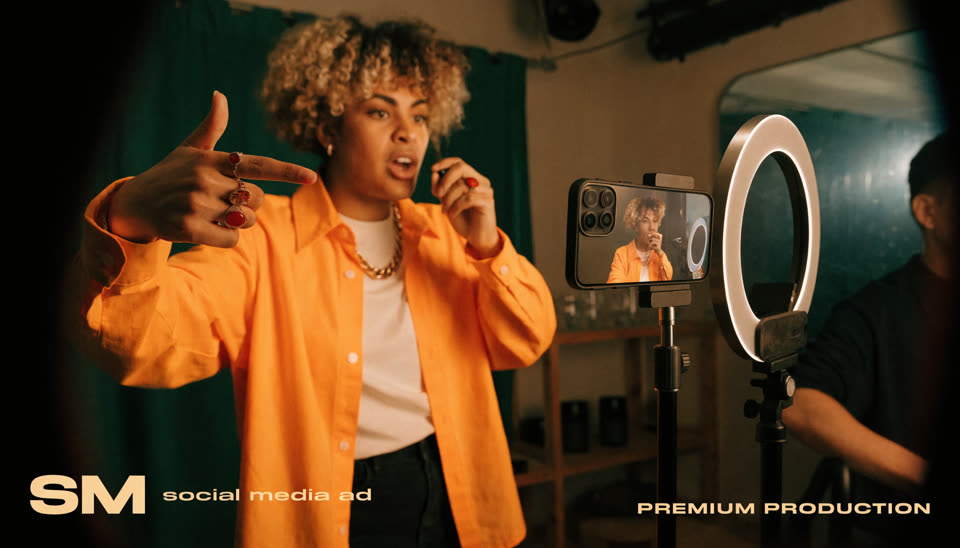
Is AI UGC as effective as real creator UGC?
AI UGC can perform as well as real creator UGC when it's briefed and graded to look unpolished and specific rather than generic, but it doesn't replace the relationship equity and platform-native trust a real creator's existing audience brings.

AI UGC and real creator UGC are often compared as if one is a drop-in replacement for the other. They're closer to two different tools that happen to produce visually similar output — and the difference matters more for what each is good at than for which one 'wins' on quality.
Nobody trusts UGC because it's real. They trust it because it's specific.
What real creator UGC has that AI UGC doesn't
A real creator brings an existing audience relationship into the post — followers who already trust their taste, which transfers some of that trust to whatever they're showing. That relationship equity is not something a generated clip can replicate, no matter how convincing the footage itself is.
Real creators also bring genuine, sometimes surprising product reactions — the specific detail a brand didn't think to brief because it only shows up in actual use. That kind of unscripted specificity is the hardest thing for a generated clip to fake convincingly.
Where AI UGC wins
AI UGC wins on speed, volume, and control. A real creator campaign takes time to source, brief, shoot, and approve — often weeks per creator. AI UGC can generate a wide batch of format-matched variants in days, across different hooks and personas, and test all of them before any media spend is committed. That volume is what makes variant testing economically possible at all.
It also removes the unpredictability of relying on a third party's schedule, mood, and off-brand ad-libs on the day of filming — for better or worse, the brand keeps creative control over every frame.
The tell that separates good AI UGC from bad AI UGC
The single biggest driver of whether AI UGC performs is whether it looks unpolished on purpose. UGC-format content that's accidentally too smooth, too well-lit, or too symmetrically framed reads as an ad wearing a UGC costume — which can actively damage trust more than an openly polished TVC would have, because the audience feels tricked rather than sold to.
The brief for AI UGC should specify handheld camera movement, a real (not staged-looking) location, and a performance style that includes small imperfections — because those are exactly the details that signal 'not an ad' to a scrolling audience.
Can AI UGC pass as real content to viewers?+
When it's briefed with handheld camera movement, natural (not studio) lighting, and a performance style with small imperfections, yes — most viewers can't reliably distinguish well-briefed AI UGC from real creator content in a scrolling feed context.
Should brands stop working with real creators and switch entirely to AI UGC?+
No — real creators still bring audience relationship equity and unscripted product reactions that AI UGC can't replicate. The stronger approach for most brands is using AI UGC for fast, wide variant testing, then investing in real creator partnerships once a winning angle is confirmed.
Does AI UGC need to disclose that it's AI-generated?+
Where AI use is material to how an audience would interpret the content — such as implying a real person's personal experience or endorsement — it should be disclosed. Good production practice treats disclosure as part of the brief, not an afterthought.
Ready to find what wins?
Tell us what you're shipping — we'll scope the first batch.